Accessibility Design That Works Beautifully in Your Home
Your home should make everyday life easier, not create unnecessary barriers.
Barb creates personalized accessibility design solutions around the way you use your home, while preserving the comfort, quality, and character of your space.
Design Around the Way You Use Your Home
Every person uses their home differently.
So, a layout that works well for one person may create challenges for someone with limited mobility, and a fixture or cabinet may look beautiful, but become frustrating when it’s difficult to reach or operate.
Accessibility design starts by understanding all those details.
Barb will look at the way you move through your home, complete everyday tasks, and interact with the features around you, and from there, she’ll identify changes that will make your space easier and more comfortable to use.
Where Accessibility Design Can Make a Difference

Bathrooms
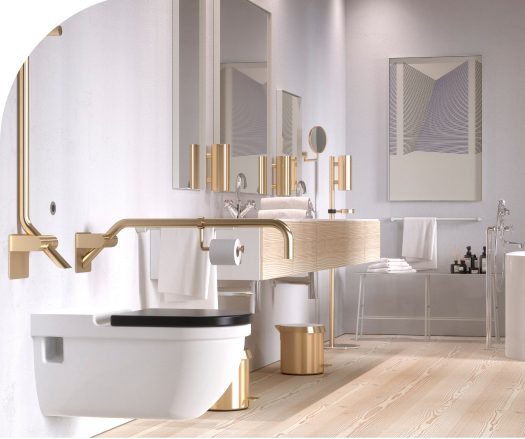
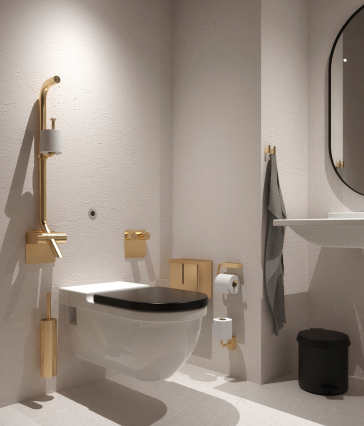
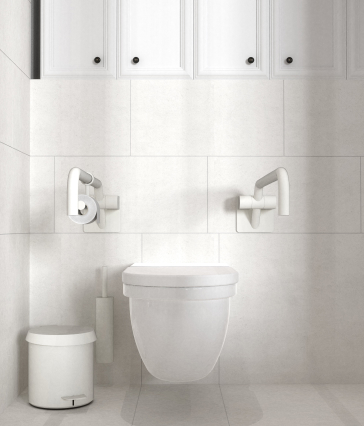
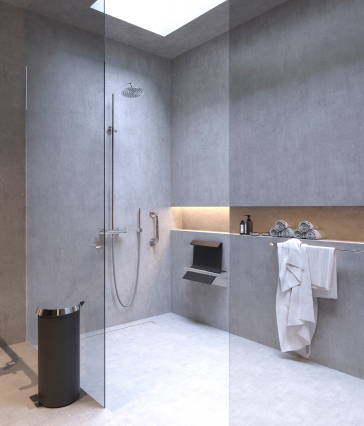
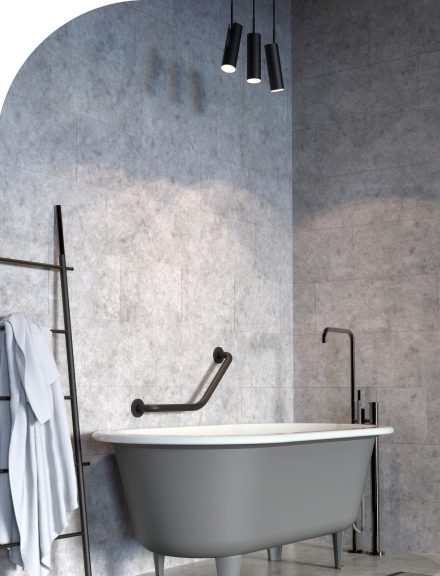
Accessible bathroom design can improve the way you enter, move through, and use your bathroom without making it feel clinical.
Barb considers things like shower access, fixtures, storage, lighting, flooring, and other details to make sure it’s as comfortable for you to use as possible.

Kitchen
An accessible kitchen should support the way you prepare meals, use appliances, reach storage, and move between work areas.
Considering things like thoughtful cabinetry, appliance placement, lighting, and clearances, Barb will make sure your kitchen becomes easier to use while still maintaining its beauty.

Living Spaces
Furniture placement, pathways, doorway clearances, flooring transitions, room layouts, and non-slip flooring, along with things like easy-to-reach switches and outlets can all affect how comfortably you move through your home.
Barb considers how each room is used and how you move from one space to another, and then looks for ways to make rooms more comfortable and accessible without compromising the way they look or feel.

Lighting and Visibility
Lighting plays an important role in accessible interior design, especially for people with low vision.
Barb considers natural and artificial light, glare, contrast, task lighting, switches, and controls to help make the rooms in your home easier to navigate and use.

Technology and Controls
Technology can reduce the effort you have to put into many everyday tasks.
Things like automated lighting, motorized blinds, smart-home controls, and other integrated systems can give you much greater control over what you can do in your home.
Start With a Home Accessibility Assessment
The best accessibility solutions start with understanding the person who will be using them.
During a home accessibility assessment, Barb will look closely at how you currently use your home and where specific spaces, features, or routines are creating difficulty.
She’ll then consider things like layout, lighting, storage, fixtures, controls, technology, and any mobility or vision needs that should influence the design.
From there, she can identify practical options that fit your home, your priorities, and the way you want to live.
A More Thoughtful Approach to Accessibility Design
Accessibility should feel like part of your home, not something that’s been added to it.
Barb approaches each project as an interior designer first, as she considers how accessibility features can be incorporated into architecture, materials, finishes, furnishings, lighting, and technology so your finished space still feels cohesive.
What’s more, Barb’s understanding of accessibility is also personal.
Seeing the barriers her sister, who is blind, has faced has made her especially aware of details that can easily be overlooked.
So, she understands how things like lighting, furniture placement, and the location of everyday items can have a significant impact on how comfortably you’ll be able to use your space.
From the First Assessment to the Finished Space
Initial Conversation
Barb begins by learning about your home, your priorities, and what you’d like to change.
Home Assessment
She reviews how your spaces look, feel, and function, then identifies opportunities to improve comfort, access, and daily living.
Recommendations and Design
Barb develops clear recommendations and, when needed, creates a complete design plan tailored to your home and lifestyle.
Project Coordination
She also works closely with trusted contractors, suppliers, and tradespeople to help carry the design through to completion.
Designed for the Person Who Lives There
Good accessibility design should be highly personalized.
Because the solution for someone with limited mobility won’t be the same as the solution for someone with low vision.
And even two people with similar needs may use their homes very differently.
Barb takes the time to understand what matters to you, what’s currently getting in the way, and what would make your home easier and more comfortable to live in.
She can also assist if you’re helping a loved one adapt their home around changing mobility, vision, or other accessibility needs.
No matter what accessibility issues you’re facing, we provide accessible interior design in Kelowna and throughout the Okanagan, with every recommendation shaped around the person who will use the space.
Interiors that Speak to You Personally